Live In-Play Betting Tactics for Champions League
 Available in US
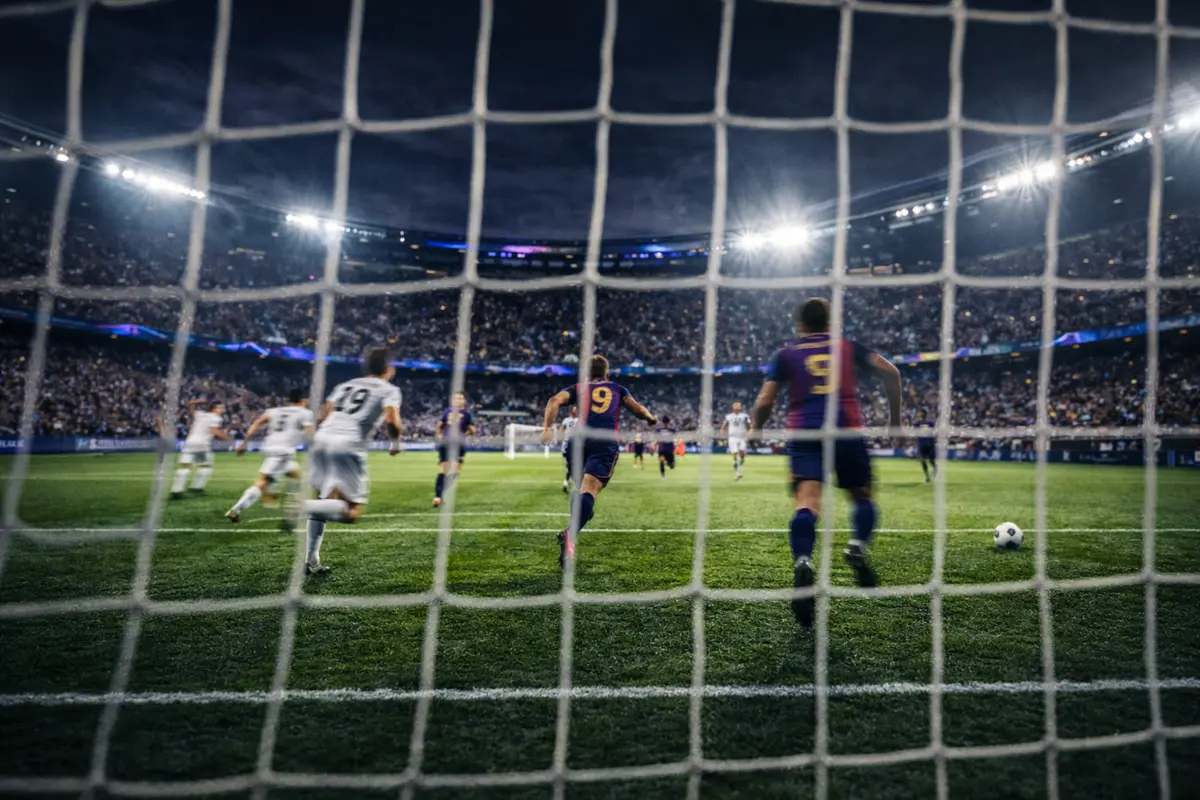
Pre-match betting is an argument about the future fought with spreadsheets. Live betting is an argument about the present fought with your eyes. The Champions League in-play market moves every second, reacting to goals, cards, substitutions, and the shifting momentum that makes European nights the most dramatic spectacle in club football. For bettors who can read the game in real time, it’s the richest opportunity the sport offers. For those who can’t, it’s a fast-moving trap.
Live betting in the Champions League differs from domestic in-play markets in one critical respect: the emotional intensity is higher. A Champions League knockout match generates more adrenaline, more impulsive decisions, and more irrational price movements than a mid-season league fixture. The public bets with their hearts during European nights, and the bookmaker’s algorithm adjusts prices based on both actual match events and the weight of money flowing in. When both of those forces are charged with emotion, the in-play odds can detach from rational probability for minutes at a time.
Reading In-Play Match Momentum Indicators
Momentum in football is real but poorly understood by most bettors. It’s not simply “one team is pressing” — it’s a composite of tactical posture, physical energy, and psychological confidence that shifts throughout a match and can be read if you know what to look for.
The first indicator is territorial dominance. Track which third of the pitch the ball spends the most time in across rolling five-minute windows. If one team has pinned the opponent in their defensive third for consecutive periods, the probability of a goal is rising — even before the shot count reflects it. In-play odds adjust based on shots and goals, but territorial control often precedes shot creation by several minutes, giving you a window to bet before the price moves.
The second indicator is pressing intensity. When a team raises their pressing line — pushing their defensive structure ten to fifteen metres higher up the pitch — it signals increased attacking intent. In the Champions League, where teams frequently start conservatively and raise intensity gradually, a shift in pressing height is one of the earliest signals that a team is about to increase their offensive output. Conversely, when a team drops their defensive line and invites pressure, they’re signalling a shift toward containment — useful information for under/over markets.
The third indicator is the tempo of transitions. In open, end-to-end Champions League matches, both teams exchange possession rapidly with quick vertical passes. This transition-heavy pattern produces goals at a higher rate than sustained possession, and it’s visible before the statistics capture it. When you see both teams launching fast breaks within seconds of losing the ball, the over market becomes more attractive — and the in-play odds often lag this visual cue by two to three minutes.
The danger with momentum reading is confirmation bias. If you’ve already decided to back a team, every attack looks like mounting pressure and every defensive stand looks temporary. The antidote is to watch the match without a position for the first fifteen to twenty minutes, forming your assessment before placing money on it. The best live bettors are the ones who treat the first quarter of a match as research and the rest as execution.
Tactical Substitutions and Their Impact on Live Markets
Substitutions are the most underpriced information events in Champions League live betting. A manager sending on a fresh attacking midfielder for a defensive one at the 60th minute is broadcasting a tactical shift in real time — and the in-play market takes thirty to ninety seconds to fully process the implications.
In the Champions League, substitutions carry more tactical weight than in domestic football. Managers use their five substitutes strategically across three windows, and the timing and type of change reveal their assessment of the match state. An attacking substitution before the 60th minute signals urgency — the manager believes the current approach isn’t working and needs more offensive firepower. A defensive substitution in the same window signals protection — they’re satisfied with the scoreline and want to shore up their structure.
The most valuable substitution to watch for is the “system change” — a substitution that alters the team’s formation rather than simply refreshing one position. When a manager switches from a back four to a back three by adding a centre-back and pushing wing-backs higher, or removes a midfielder for a striker to go from 4-5-1 to 4-4-2, the tactical landscape of the match shifts fundamentally. These changes affect goal probability, cards probability, and the likely pattern of play for the remaining thirty minutes. The in-play odds adjust for the fact that a substitution was made, but they don’t always fully capture the magnitude of the tactical shift.
For practical purposes, maintain a mental model of each team’s likely substitution patterns before the match starts. If a manager typically introduces a pacey winger after the 60th minute in matches where his team is trailing, you can anticipate that substitution and position your live bet before it happens. The window between “I expect this change to happen” and “the change has happened and the market has repriced” is where the most consistent live betting edge exists.
Live Betting Strategy for Different Match States
The optimal live betting approach depends on the current scoreline and the match context. Blanket rules don’t work because a 0-0 match in the 60th minute of a league phase fixture is a fundamentally different betting proposition from a 0-0 match in the 60th minute of a knockout second leg with the aggregate level.
In matches where the favourite leads by one goal at halftime, the public typically overestimates the probability of a comfortable second-half cruise. The leading team often drops their intensity, invites pressure, and the trailing team raises theirs. The draw or “team to score next” market on the underdog frequently offers value in this scenario, particularly when the underdog makes an attacking substitution at the break.
In matches that are 0-0 at halftime, the live over 1.5 goals market is often attractive. Champions League matches that remain goalless at the break produce late goals at an elevated rate — the tactical conservatism that produced the first-half stalemate typically gives way to increased risk-taking as both teams (and their managers) recognise that a point or a goalless draw may not serve their objectives. The 0-0 halftime scoreline is the market’s most reliable signal that second-half goals are coming, and the live odds often underweight this pattern.
In knockout second legs where one team trails on aggregate, the trailing team’s match result price at kickoff already reflects their need to attack. But the in-play market tends to overreact to early goals in these fixtures. If the trailing team scores first (reducing or eliminating the aggregate deficit), their match result and qualification odds shorten dramatically — often more than the single goal warrants, because the public floods in with emotional money. If the leading team on aggregate scores first (extending their advantage), the trailing team’s qualification odds collapse, sometimes creating value on a consolation fight-back that doesn’t affect the tie outcome but does affect individual match markets.
The Live Bet That Pays for Your Evening
If you want one repeatable live betting angle for Champions League nights, it’s this: back the over on total match goals during the 55th-65th minute window in matches that are currently level.
This specific window captures the period just before and during the first wave of substitutions, when managers assess the match state and typically inject attacking intent. In Champions League matches level at the 55th minute, the probability of at least one more goal being scored before full time is consistently higher than the in-play odds imply. The market prices total goals based on the trajectory of the first 55 minutes — if it’s been a cagey, low-event match, the algorithm projects that pattern forward. But the substitution window disrupts the pattern, introducing fresh energy and often a more aggressive tactical setup.
The edge isn’t enormous on any single match — you’re typically finding 3-5% of implied probability value. But it’s consistent across matchdays, it doesn’t require deep tactical analysis (just a clock and a scoreboard), and it exploits a structural feature of how football matches evolve that the in-play pricing model handles imperfectly. Over a full Champions League season of eight league phase matchdays plus knockout rounds, a disciplined application of this single angle — properly staked, never forced in matches where the conditions don’t apply — can comfortably fund your next season’s bankroll seed.
