UCL Betting Markets: Maximizing Champions League Returns
 Available in US
The sheer variety of betting options available for a single Champions League fixture can leave even seasoned punters scratching their heads. When Real Madrid hosts Manchester City for a midweek European blockbuster, major bookmakers routinely offer somewhere between one hundred fifty and two hundred distinct markets. Everything from predicting the exact scoreline to wagering on which defender picks up the first yellow card falls within the realm of possibility. Navigating this landscape without a clear understanding of how each market functions is a recipe for confusion and, ultimately, losses that could have been avoided with better preparation.
This exploration of Champions League betting markets aims to demystify the options available to you. Rather than providing a superficial overview, we will examine each major market category in genuine depth, discussing not just the mechanics but also the strategic considerations that separate recreational punters from those who approach European football betting with serious intent. The goal is not to tell you which bets to place but to ensure you understand the tools at your disposal well enough to make informed decisions based on your own analysis.
Understanding betting markets requires appreciating that bookmakers are not simply offering you opportunities to win money. They are businesses running sophisticated operations designed to generate profit regardless of match outcomes. Every market they create has been priced with careful attention to both probability and customer behavior. Your task as a bettor involves identifying situations where their pricing contains inefficiencies large enough to overcome the built-in margins. That process becomes considerably easier when you thoroughly understand what you are actually betting on.
Once you are familiar with pre-match options, you can maximize your edge by utilizing advanced in-play UCL wagering strategies during the games.
Match Result and 1X2 Betting Odds
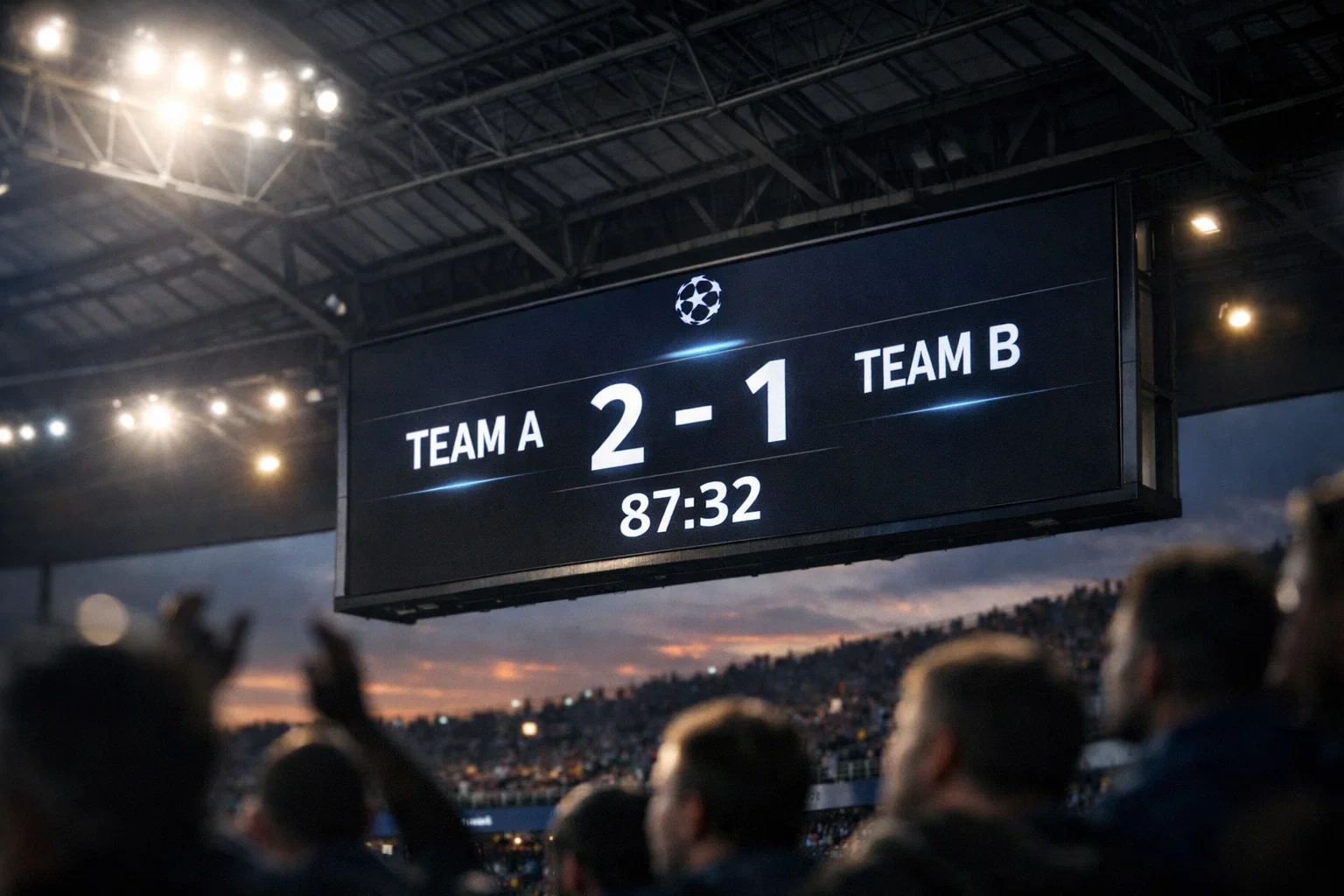
Match result betting represents the foundation upon which all other football wagering builds. The concept could not be simpler: you predict whether the home team wins, the away team wins, or the match ends in a draw after ninety minutes of play. This market settles based solely on regular time, meaning extra time and penalty shootouts in knockout rounds have no bearing on your bet. If you backed Manchester United to win their Round of 16 first leg and they drew 1-1, your bet loses regardless of what happens in subsequent stages of that tie.
The simplicity of match result betting makes it simultaneously attractive and dangerous. Attractive because everyone understands the premise. Dangerous because that accessibility encourages lazy analysis. Many punters look at the fixture, decide which team seems stronger based on reputation or recent headlines, and place their bet without examining whether the offered odds represent genuine value. Champions League matches between elite clubs produce draws far more frequently than casual observers expect. The psychological and tactical dynamics of European knockout football encourage cagey approaches, particularly in first legs where teams prioritize not conceding away goals over chasing victory at all costs.
When analyzing match result markets for Champions League fixtures, consider factors beyond simple team quality comparisons. The stage of the competition matters enormously. League phase matches against theoretically weaker opposition often see elite clubs rotating squads, creating unpredictability that pure quality assessments miss. Knockout ties introduce aggregate thinking that fundamentally changes how teams approach individual matches. A side trailing 2-0 from the first leg attacks with abandon in the return fixture, while a team holding a comfortable lead might sit deep and absorb pressure rather than pushing for additional goals they do not need.
Both Teams to Score
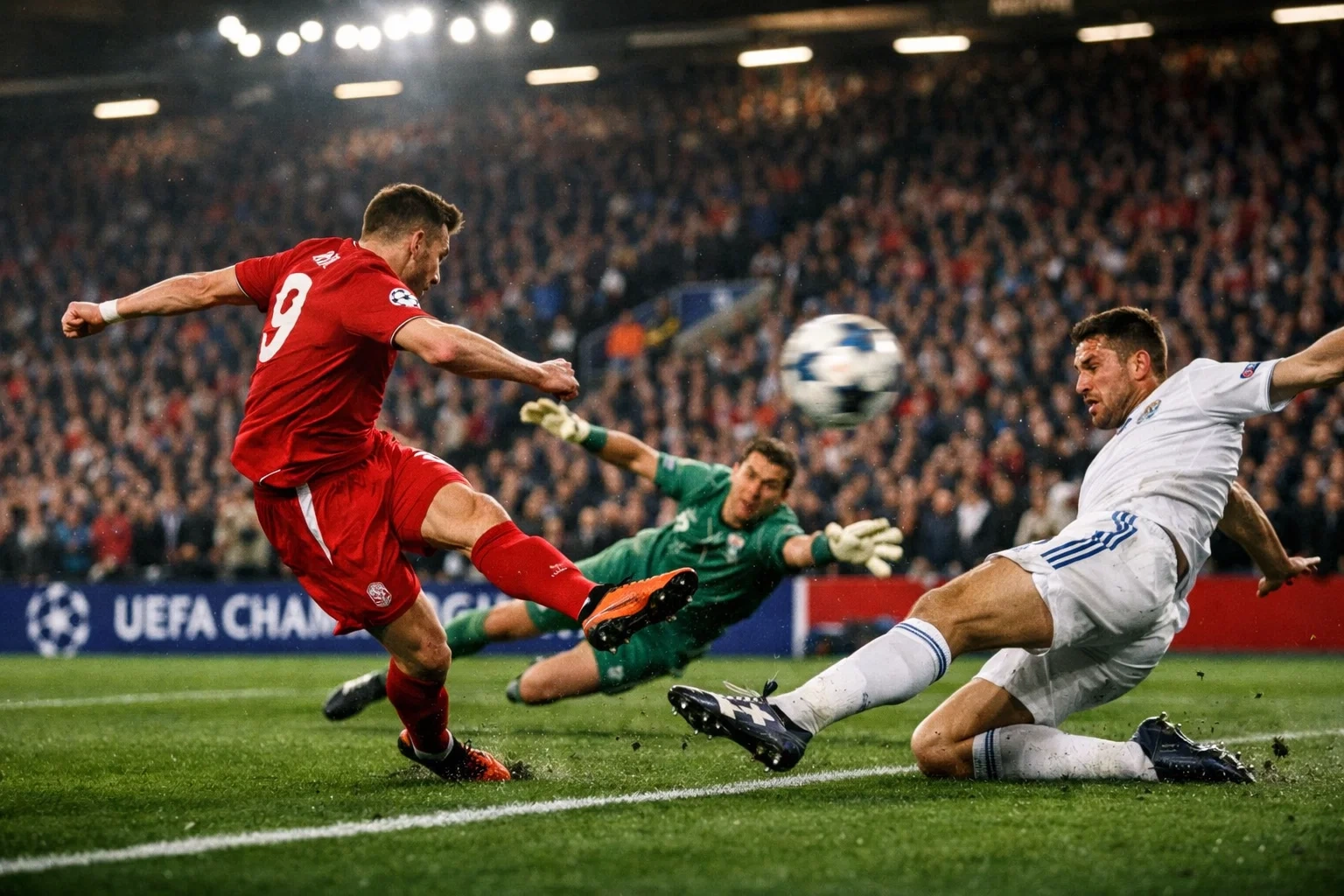
Both teams to score has emerged as perhaps the most popular market for Champions League betting over the past decade, and understanding why requires appreciating how European football differs from domestic competition. When the best clubs from across the continent meet, matches tend to feature quality attacking players on both sides. The defensive solidity that allows mid-table domestic sides to frustrate elite opponents rarely exists at Champions League level, where even the weakest qualifiers typically possess genuine offensive threat.
Statistical analysis supports this intuition. Both teams to score lands in roughly sixty percent of Champions League knockout matches over extended sample sizes, significantly exceeding rates in most domestic leagues. The combination of attacking talent, high-stakes pressure that sometimes causes defensive lapses, and tactical approaches that prioritize scoring creates an environment where clean sheets are genuinely difficult to achieve. Even dominant sides concede with surprising regularity when facing opponents who have earned the right to compete at this level.
However, the popularity of this market means bookmakers price it accordingly. You cannot simply back both teams to score on every glamour fixture and expect to profit. The key lies in identifying matches where the probability of both sides finding the net exceeds what the odds imply. Consider the specific matchup rather than just the names involved. A tie between two possession-oriented sides might produce fewer goals than one featuring a counter-attacking specialist against a team that dominates territory but leaves space in transition. Defensive injuries, goalkeeper form, and the tactical tendencies of specific managers all influence whether a particular fixture suits the both teams to score market.
Over and Under Goals Markets
Over and under goals markets offer flexibility that match result betting cannot provide. Rather than predicting winners, you focus purely on the total number of goals scored by both teams combined. The standard line sits at 2.5 goals, meaning you need three or more for an over bet to succeed or two or fewer for an under bet to win. This binary structure around a half-goal line eliminates the possibility of pushes, ensuring every bet produces a definitive outcome.
The beauty of goals markets lies in the alternative lines available. While 2.5 goals represents the default, bookmakers offer options ranging from under 0.5 to over 5.5 and various points between. Each line carries different odds reflecting the probability assessment of that specific threshold being crossed. A match between defensive sides might see over 1.5 goals priced as a heavy favorite, while over 3.5 goals offers longer odds. Conversely, an attacking showcase between historically high-scoring opponents might make over 3.5 the value play while under 2.5 sits at attractive prices for those expecting a tactical battle.
Strategic use of goals markets requires moving beyond simple expectations about whether a match will be high or low scoring. Consider the range of likely outcomes and how different lines price those scenarios. If you believe a match has roughly equal chances of producing two goals, three goals, or four goals, backing over 2.5 at odds implying fifty percent probability might represent poor value even though you expect plenty of goals. The specific line selection matters as much as your general assessment of match character.
Asian Handicap Betting

Asian handicap betting deserves considerably more attention from Champions League bettors than it typically receives. This market format, originating from Asian gambling traditions, eliminates the draw as an outcome by applying goal handicaps to one or both teams. The mechanics can initially confuse newcomers, but the underlying concept proves elegant once understood.
A standard Asian handicap might show Barcelona at minus one goal against a weaker opponent. If you back Barcelona on this line, they must win by two or more goals for your bet to succeed. A one-goal Barcelona victory results in your stake being refunded, while any other outcome means you lose. This structure differs from European handicaps, which typically settle losing bets on exact handicap results rather than refunding them.
Quarter-goal lines add further nuance. A minus 0.75 handicap splits your stake between two adjacent lines, effectively backing half your money at minus 0.5 and half at minus 1.0. This creates scenarios where you might win half your bet while losing the other half, or win full amounts when outcomes exceed both handicap thresholds. The complexity rewards those willing to invest time understanding the mechanics while deterring casual punters who prefer simpler structures.
The practical advantage of Asian handicaps for Champions League betting involves removing draw variance from your calculations. European football produces draws frequently enough that match result bets carry substantial risk of losing despite correctly identifying the better team. Asian handicaps allow you to express views about which side will control a match without needing to predict whether that control translates into victory or merely a fought draw. When you strongly fancy one team but consider draw risk unacceptably high, Asian handicaps provide cleaner exposure to your analysis.
Correct Score Betting
Correct score betting occupies the opposite end of the risk spectrum from match result wagering. Instead of predicting outcomes in broad categories, you attempt to forecast the exact final scoreline. The difficulty is obvious: any two-goal match offers numerous possible score combinations, and predicting which specific combination will occur requires either remarkable insight or considerable luck.
Champions League correct score markets typically offer odds ranging from around six to one for the most likely outcomes up to several hundred to one for improbable scorelines. Historical data reveals that 1-1 draws occur most frequently in the competition, followed closely by 2-1 results to either side and then 1-0 home victories. These common scorelines naturally carry shorter odds, while exotic outcomes like 4-4 draws or 5-0 thrashings offer substantial potential returns at correspondingly reduced probability.
Some bettors approach correct score markets by spreading small stakes across multiple likely outcomes, accepting that most bets will lose while hoping occasional winners at decent odds produce overall profit. Others wait for specific situations where they hold strong convictions about how a match will unfold, perhaps a defensive stalemate likely to produce a goalless draw or a one-sided affair likely to end 3-0 or 4-0 to the dominant side. Neither approach consistently outperforms bookmaker pricing without genuine analytical edge, but correct score betting rewards deep match knowledge more than many alternatives.
Outright and Tournament Markets
Outright and tournament markets operate on longer timescales than individual match betting, with positions available from before the competition begins through to the knockout stages. Betting on which team will lift the trophy represents the most common outright market, but options extend to top goalscorer, reaching specific stages, nationality of winner, and various other long-range propositions.
The timing of outright bets significantly impacts both odds and risk. Backing a potential winner before the league phase draw offers the longest odds but exposes you to maximum uncertainty. Injuries, poor form, or difficult draws can torpedo pre-season selections before knockout football even begins. Conversely, waiting until quarterfinal stages reduces odds substantially but provides much clearer paths to potential success. Different bettors prefer different approaches based on their risk tolerance and analytical confidence in long-range predictions.
Top goalscorer markets introduce individual player performance into Champions League betting. Strikers from clubs that advance deep into the competition naturally enjoy more opportunities to accumulate goals, making team success and individual scoring somewhat correlated. Historically, players from the eventual finalists dominate this market, though occasional winners emerge from semifinalists or even quarterfinalists with particularly prolific individual campaigns.
When evaluating top goalscorer selections, consider playing style alongside pure finishing quality. A clinical striker receiving service from elite creators has different prospects than an equally talented forward operating in a more isolated role. Penalty-taking responsibilities matter as well, since spot kicks contribute substantially to Champions League goal tallies for primary penalty takers. The player who scores most goals is not always the best finisher but often the one whose role and team context provide maximum scoring opportunities.
Bet Builders and Same-Game Multiples
Bet builders and same-game multiples have transformed Champions League betting by allowing punters to combine selections from within a single fixture. Instead of treating markets independently, you might couple a team to win with over 2.5 goals and a specific player to score anytime. Each additional leg increases both potential returns and difficulty, creating opportunities for substantial payouts from modest stakes.
The challenge with bet builders involves understanding correlation between selections. Certain combinations logically connect in ways that reduce actual value despite appearing to boost odds. If you back a dominant favorite on a large Asian handicap, adding a clean sheet selection makes strategic sense since both require controlling the match comprehensively. However, combining that same handicap victory with both teams to score creates internal contradiction, since comprehensive dominance suggests the opponent struggles to score while both teams scoring implies competitive balance.
Bookmakers have become increasingly sophisticated at pricing bet builder combinations to account for correlation. Early iterations of these products sometimes offered exploitable edges where certain combinations exceeded fair value, but competition and analytical improvements have largely closed those gaps. Modern bet builders require genuine analytical insight rather than clever combination finding to produce consistent profits.
Player Proposition Markets
Player proposition markets extend betting opportunities to individual performances beyond goalscoring. You might wager on a midfielder to record an assist, a defender to win a certain number of aerial duels, or an attacker to exceed a shots threshold. These markets attract less bookmaker attention than headline options, potentially creating value opportunities for specialists who analyze player performances in granular detail.
Cards markets represent a particularly interesting player proposition category for Champions League betting. Certain referees demonstrate consistent tendencies toward strictness or leniency that influence card totals across matches they officiate. Similarly, some players accumulate bookings at rates far exceeding teammates, whether through aggressive tackling styles, frequent fouling to prevent counterattacks, or tendencies to protest decisions vocally. Tracking these patterns enables informed betting on cards markets where broader punter attention focuses elsewhere.
Shots and shots on target markets reward understanding of player roles and team systems. A forward expected to receive substantial service might represent value on over shots lines even if their finishing has been poor, since shot volume and shot conversion are distinct metrics. Conversely, a clinical finisher operating in a structured system that creates few chances might consistently fall under shots thresholds despite scoring regularly from limited opportunities.
Live Betting Markets
Live betting markets deserve mention even within a discussion focused primarily on pre-match options. Every market described above becomes available during Champions League matches, with odds adjusting continuously based on scoreline changes, time elapsed, and in-game events. The transition from pre-match to live betting fundamentally changes the analytical challenge, requiring rapid assessment rather than considered pre-match preparation.
Many bettors find live markets offer better value than pre-match equivalents because bookmakers must adjust odds quickly without the luxury of extended pricing analysis. If you recognize that a trailing team is completely dominating play despite the current scoreline, their odds to equalize might exceed fair probability before adjustments catch up to on-pitch reality. However, live betting also carries risks that pre-match wagering avoids, particularly the temptation to chase losses through increasingly desperate in-game positions.
Understanding the Full Range of Markets

Understanding the full range of Champions League betting markets represents foundational knowledge for anyone serious about European football wagering. The specific markets that suit your approach depend on your analytical strengths, risk tolerance, and the time you can dedicate to research. Some bettors specialize narrowly, developing deep expertise in particular market types that allow them to identify value others miss. Others maintain broader portfolios, applying their analysis across multiple markets as specific fixtures suggest appropriate opportunities.
What matters ultimately is not which markets you choose but whether you truly understand what you are betting on and why the odds available might represent value. Bookmakers profit by understanding their products better than their customers. Your task involves closing that knowledge gap sufficiently to identify situations where their pricing errs in your favor. That process begins with market comprehension and extends through diligent analysis into disciplined execution. The markets exist as tools; how effectively you wield them determines your results.
Specials and Novelty Markets
Specials and novelty markets round out the Champions League betting landscape with options that fall outside traditional match-focused wagering. These might include bets on which manager will be sacked first during the tournament, whether any team will complete the campaign unbeaten, or specific statistical milestones like total goals scored across all matches in a particular round. While these markets rarely attract serious betting volume, they provide entertainment value and occasionally present genuine opportunities for those who track obscure angles that mainstream analysis ignores.
Tournament specials require particularly careful evaluation because they often involve outcomes determined by factors beyond pure football merit. A manager’s job security depends on board relationships, financial circumstances, and club politics alongside match results. Predicting such outcomes demands knowledge extending well beyond tactical analysis and team performance metrics. Most successful bettors avoid these markets entirely, recognizing that their edge lies in football analysis rather than predicting administrative decisions.
The relationship between different markets within the same fixture creates opportunities for sophisticated bettors who understand how odds should theoretically connect. If a bookmaker prices one team as heavy favorites while simultaneously offering generous odds on both teams to score, that combination might indicate pricing inconsistency worth exploiting. The heavy favorite designation suggests dominance, while high both teams to score odds imply defensive vulnerability. These cannot both be fully accurate simultaneously, meaning at least one market likely offers better value than its pricing suggests.
Developing Market Expertise
Developing expertise in specific market types rather than attempting to master everything simultaneously tends to produce better results for most bettors. Someone who deeply understands Asian handicap mechanics and can quickly assess how specific scorelines affect various lines holds genuine advantage in that market. Spreading the same attention across every available option dilutes expertise without proportionally increasing opportunities. The Champions League offers enough fixtures across each season that specializing narrowly still provides abundant betting chances while allowing the development of genuine market expertise.
The psychological aspects of market selection deserve attention alongside analytical considerations. Certain markets encourage behaviors that damage long-term profitability regardless of their intrinsic characteristics. Correct score betting, for instance, produces infrequent wins at high odds that can create addictive patterns as bettors chase the emotional high of substantial payouts. Accumulators combining multiple match results offer similar psychological traps, with the excitement of watching multiple legs potentially win overriding sober assessment of expected value.
Recognizing your own psychological vulnerabilities helps guide appropriate market selection. If you find yourself drawn to high-variance options for excitement rather than analytical reasons, that tendency probably indicates you should avoid those markets entirely or restrict stakes to levels where outcomes carry minimal financial significance. The goal remains long-term profitability, and protecting yourself from self-destructive patterns matters as much as identifying value in the markets themselves.
Seasonal Patterns and Tournament Phases
Seasonal patterns affect different markets in distinct ways throughout the Champions League calendar. Early league phase fixtures often feature rotated squads and experimental lineups as managers balance European and domestic commitments. These matches suit certain markets better than others, with player props becoming unreliable when starting elevens remain uncertain until shortly before kickoff while goals markets might maintain predictability based on team attacking philosophies regardless of specific personnel.
Knockout football transforms the betting landscape entirely. The two-legged format of ties before the final introduces aggregate thinking that changes how teams approach individual matches. First legs tend toward caution as neither side wants to concede the away goals that could prove decisive in the return fixture. Second legs vary dramatically based on first-leg outcomes, with teams needing goals attacking relentlessly while those protecting leads prioritize defensive solidity. Understanding these dynamics enables market selection tailored to specific knockout contexts rather than treating all Champions League matches identically.
The final itself represents a unique betting event with characteristics unlike any other fixture in the tournament. Neutral venues eliminate home advantage, while the singular nature of the occasion creates psychological pressure that affects some players more than others. Historical finals data reveals certain patterns, including lower average goal tallies than knockout rounds generally and a tendency for favorites to face more difficulties than their domestic dominance might suggest. Whether these patterns persist or reflect small sample quirks remains debatable, but serious bettors at least acknowledge the final’s distinctive nature when approaching its markets.
Building Long-Term Expertise

Building genuine expertise in Champions League betting markets requires sustained effort over multiple seasons. Each tournament provides learning opportunities as specific selections succeed or fail, revealing whether your understanding of particular markets matched reality. Recording not just outcomes but the reasoning behind each bet enables retrospective analysis that identifies systematic errors or confirms that losses resulted from variance rather than analytical failures. This learning process never truly ends, as bookmaker sophistication continually increases and market dynamics evolve in response to changing betting patterns.
The markets available for Champions League betting will likely continue expanding as bookmakers compete for customer attention through product innovation. Understanding foundational markets prepares you to evaluate new offerings that emerge, assessing whether they provide genuine opportunities or merely novel ways to lose money through unfamiliar mechanisms. Whatever specific options future seasons bring, the fundamental principle remains constant: profitable betting requires understanding both what you are wagering on and why the available odds might exceed fair value. Markets are merely vehicles for expressing analytical conviction. The value lies in the analysis itself, not in any particular market’s inherent characteristics.
Discover comprehensive odds comparisons and expert analysis directly on the Champions League Bet Expert homepage.
