Hidden Environmental Factors in Champions League Bets
 Available in US
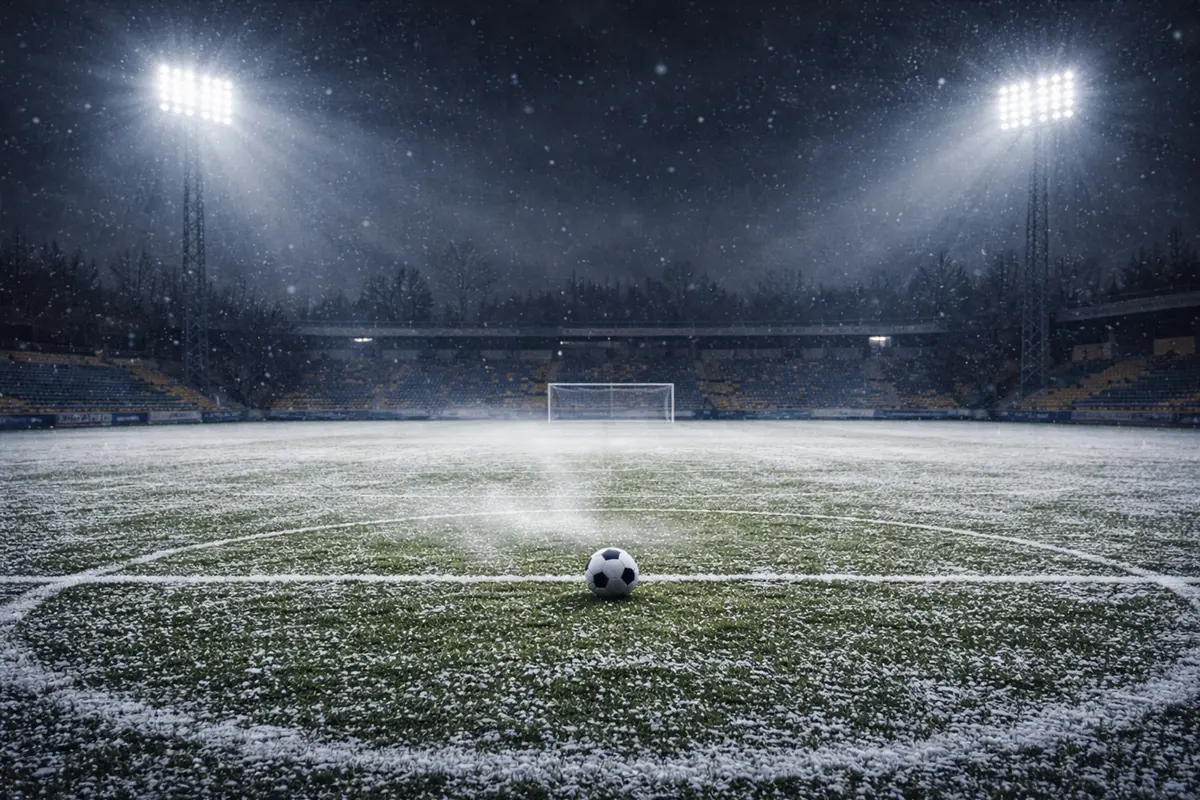
The Champions League is the only club competition that sends teams from Portugal to Kazakhstan, from Scandinavia to Turkey, from Scotland to Israel — all within the same tournament round. This geographical sprawl creates variables that exist nowhere in domestic football and that most bettors completely ignore: temperature differentials of thirty degrees between home and away, pitch surfaces that range from manicured natural grass to controversial artificial turf, and travel schedules that can involve six-hour flights across multiple time zones. These aren’t trivial details. They’re measurable factors that shift match probabilities, and the market barely prices them.
Every Champions League season produces results that confuse the public but make perfect sense when you factor in the environmental context. The Spanish side that looked listless on a freezing Tuesday night in Norway. The English club that couldn’t cope with the heat and humidity of an early-season fixture in Istanbul. The heavy favourite that stumbled on an artificial pitch they’d never trained on. The explanations are right there — but only if you’re looking.
Climate and Temperature Match Impact
Football performance is measurably affected by temperature, and the Champions League forces teams into climate conditions that domestic competition never does. Research on professional football has consistently shown that extreme cold (below 5 degrees Celsius) and extreme heat (above 30 degrees) both degrade physical output, with the effect most pronounced in high-intensity activities like sprinting, pressing, and defensive recovery runs.
For Champions League betting, the climate factor is most relevant in two scenarios. The first is early-season matches (September and October) where teams from Northern European leagues travel to Southern or Southeastern European venues. A match kicking off at 21:00 local time in Athens, Istanbul, or Madrid can still be played in temperatures of 25-30 degrees during September — conditions that are physically taxing for teams accustomed to training and playing in 10-15 degree weather. The visiting team’s pressing intensity and sprint volume typically drops in these conditions, favouring the home team’s adaptation and the under on total goals.
The second scenario is the reverse: late-season matches (November through February) where teams from warmer climates travel to Northern or Eastern European venues. A fixture in Moscow, Stockholm, or Glasgow in November or December might be played in near-freezing temperatures, on a heavy pitch, under conditions that teams from Spain, Portugal, or Southern France simply don’t encounter domestically. Cold weather affects ball control (the ball moves faster on hard, frozen surfaces), reduces the effectiveness of short-passing styles, and physically drains players who aren’t acclimatised.
The market acknowledges climate as a vague “home advantage” factor but rarely prices the specific magnitude of the temperature differential. A ten-degree difference between a team’s home climate and the away match conditions produces a small but measurable effect. A twenty-five-degree difference produces a larger one. Checking the weather forecast for each Champions League venue before matchday and comparing it to each team’s home climate is a five-minute exercise that adds a genuine, if modest, edge to your pre-match analysis.
Artificial vs. Natural Pitches
Artificial pitches remain one of the most contentious topics in Champions League football, and for bettors, they represent a consistent source of mispriced matches. Several Champions League participants play their home matches on artificial turf — typically clubs from Scandinavian and Eastern European leagues where harsh winters make natural grass maintenance impractical.
The effect of artificial pitches on match outcomes is measurable and consistent. Teams playing on artificial surfaces they’re accustomed to enjoy an enhanced home advantage compared to the tournament average. The ball bounces differently — higher and faster — which affects passing accuracy, first touch, and defensive timing for visiting teams. Players unfamiliar with the surface often struggle with the pace of the ball in the first twenty to thirty minutes, leading to uncharacteristic errors that translate into early goals.
Data from recent Champions League seasons shows that home win rates on artificial pitches are approximately 5-8 percentage points higher than on natural grass, after controlling for team quality. The under market is also affected: unfamiliarity with the surface tends to produce cautious play from visiting teams, which slightly suppresses total goals compared to the same fixture on natural grass.
For betting purposes, any Champions League match played on an artificial surface should trigger an adjustment to your model. Increase the home team’s expected output by a small margin, decrease the away team’s expected output, and check whether these adjustments shift the value in any available market. The adjustment is particularly valuable in the league phase, where strong teams from major leagues visit artificial-pitch clubs for the first time and occasionally drop results the market didn’t anticipate.
Long-Distance Travel and Time Zone Disruption
Travel fatigue in the Champions League is not a myth — it’s a physiological reality with measurable effects on athletic performance. The scientific literature on jet lag and athletic output is extensive: eastward travel across three or more time zones disrupts circadian rhythms for approximately one day per time zone crossed. A team flying from London to Almaty (five time zones east) needs roughly five days to fully acclimatise. They arrive two days before the match. The mismatch between required and actual recovery time isn’t trivial.
The effects manifest in specific ways that matter for betting. Reaction time slows, which affects defensive decision-making and goalkeeping. Cognitive function dips, which impacts tactical discipline and positioning. Sleep disruption reduces the body’s ability to recover from high-intensity efforts, which means travelling teams fade more in the second half of matches following long eastward journeys.
Westward travel is generally less disruptive — the body adapts more easily to a longer day than a shorter one — but still produces measurable effects on trips exceeding three time zones. South American-born players who’ve spent years in European football are typically well-adjusted to transatlantic-style travel, but Scandinavian or British players making their first trip to Central Asia or the Middle East may experience more significant disruption.
The betting application is straightforward but requires diligence. For every Champions League fixture, calculate the travel distance and time zone shift for the visiting team. Trips under 1,500 kilometres with no significant time zone change produce negligible travel effects. Trips of 2,500-4,000 kilometres with two to four time zones of shift produce small but measurable effects that are worth factoring into your model. Trips exceeding 4,000 kilometres with five or more time zones of shift produce effects that should meaningfully adjust your probability estimates — typically 2-4 percentage points in favour of the home team beyond the standard home advantage.
Altitude: The Factor Nobody Remembers
Altitude doesn’t feature prominently in Champions League discussions because few European venues sit at significant elevation. But several qualifying-route clubs and occasional group-stage participants play at altitudes of 500-1,000 metres above sea level, and a handful of potential venues in Turkey, Switzerland, and parts of Eastern Europe sit at elevations where the thinner air produces subtle but real effects on match dynamics.
The primary impact of moderate altitude (500-1,500 metres) on football is reduced aerobic capacity for unacclimatised players. Teams visiting from sea-level cities experience slightly faster onset of fatigue, particularly in the second half. The ball also behaves differently in thinner air — it travels faster through the air and swerves less, which affects long passing, crossing, and shooting. Goalkeepers accustomed to sea-level ball flight sometimes misjudge the trajectory of shots and crosses at altitude.
These effects are marginal at the elevations typical of European football — nothing like the dramatic altitude advantage seen in South American football at venues above 3,000 metres. But in a competition where marginal edges matter and the market doesn’t price them, even a small altitude adjustment can shift the value on a match from neutral to positive.
Building the Environmental Edge Into Your Model
The practical challenge with weather, pitch, and travel factors is integration. Individually, each factor produces a small edge — typically 1-3 percentage points on match probability. Combined, they can produce a meaningful compound adjustment. But adding five separate small adjustments to your model introduces the risk of overfitting, where you’re layering corrections on top of corrections and losing the accuracy of the underlying estimate.
The solution is a tiered approach. For most Champions League fixtures, environmental factors are negligible — two teams from similar climates, natural grass, moderate travel distance. Apply no adjustment. For fixtures where one significant environmental factor is present (artificial pitch, extreme temperature differential, or long-distance travel), apply a single adjustment of 2-3 percentage points in the appropriate direction. For rare fixtures where multiple factors compound (long travel to an artificial pitch in extreme cold, for example), apply a larger compound adjustment of 4-6 percentage points.
This tiered system keeps the adjustment proportional to the evidence. Most matchdays, it changes nothing about your selections. On the matchdays where it matters — a Pot 1 side visiting an unfamiliar artificial pitch in Eastern Europe after a six-hour flight — the environmental adjustment can be the difference between seeing value and missing it.
The Edge Hiding in Plain Sight
The reason environmental factors remain profitable for informed bettors is that they’re invisible in the data most people use. xG models don’t adjust for pitch surface. Elo ratings don’t account for travel fatigue. Coefficient rankings don’t reflect altitude or temperature. The mainstream analytical tools that drive market pricing treat every Champions League match as if it’s played on the same pitch, in the same climate, after the same travel schedule.
They’re not. A match in a packed 20,000-seat stadium on artificial turf in -5 degrees after the visitors flew five hours east is a fundamentally different event than the same two teams meeting on natural grass in 15 degrees after a two-hour flight. The market prices both as if the only variables are team quality and home advantage. The bettor who adds the environmental layer sees what the market is missing — and in a competition as geographically diverse as the Champions League, those invisible factors appear on every single matchday, quietly tilting probabilities in directions the odds haven’t fully captured.
